

-
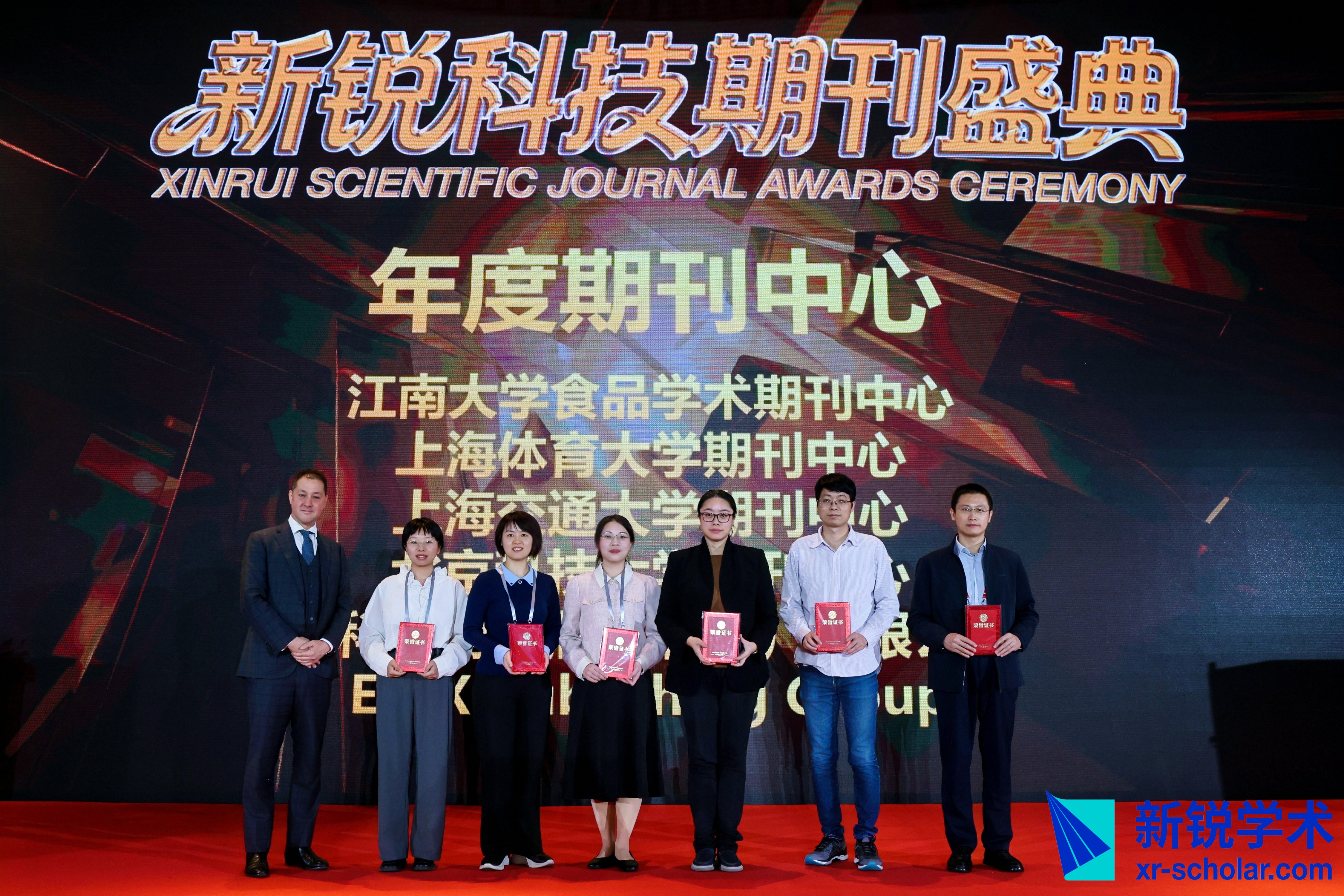 EIVX Receives Prestigious Award at the Awards Ceremony
Zhuhai, 14 January 2026 – EIVX Publishing Group attended the Xinrui Scientific Journal Awards Ceremony, where the 2025 Annual Awards were announced. The event, organized by Xinrui Scholar — a respected journal ranking platform under the Chinese Academy of Sciences. Awards were given in four categories: Individual Awards, Journal & Journal Center Awards, Content & Publishing Innovation Awards, and Sci-Tech Journal Development Ecosystem Awards.
EIVX was honored with the "Annual Journal Center" award, highlighting its exceptional publishing capabilities and innovative practices. This recognition reflects EIVX's commitment to enhancing quality and impact in scholarly communication and advancing global knowledge dissemination.
-
 Why is Public Health and Environment concerned about microplastics in drinking water
Few contaminants have captured scientific attention as quietly and pervasively as microplastics. These tiny fragments, shed from clothing, packaging, tires, and industrial processes, have found their way into rivers, lakes, groundwater, and ultimately the taps that supply households. The Public Health and Environment journal has made this issue a recurring focus, not because the science is settled, but precisely because so much remains uncertain. Understanding why this topic matters requires looking beyond alarm headlines and into the complex interplay of exposure, toxicology, and water governance.
At its core, the concern stems from the sheer ubiquity of microplastics. They are not confined to remote oceanic gyres or pristine mountain streams. They appear in treated drinking water, bottled water, and the distribution networks that deliver water to millions of homes. The Public Health and Environment journal examines how these particles originate, how they travel through environmental systems, and how conventional water treatment processes handle them. The picture that emerges is neither panic-inducing nor reassuring. It is a call for careful, sustained investigation.
One reason for concern is the physical nature of microplastics themselves. Unlike dissolved chemicals, these particles come in varied sizes, shapes, and polymer compositions. Some are spherical beads; others are irregular fragments or fibres. This diversity complicates risk assessment. A particle small enough to pass through filtration membranes may interact with biological tissues in ways that larger particles cannot. The Public Health and Environment journal highlights the need for standardised methods to characterise microplastics in water, because without consistent measurement, comparisons across studies become difficult and regulatory decisions rest on shaky ground.
Chemical concerns add another layer. Microplastics are not inert. They can absorb and concentrate environmental pollutants, including heavy metals and persistent organic compounds. They may also leach additives used during plastic manufacturing, such as plasticisers and stabilisers. When these particles enter drinking water, the question becomes not only what the plastic itself does, but what it carries with it. The Public Health and Environment journal explores these dual pathways—particle toxicity and chemical transfer—while noting that laboratory findings do not always translate directly into human health outcomes.
The human dimension is equally important. Drinking water is not just one exposure route among many; it is a daily necessity. Unlike occasional contact with contaminated soil or air, water consumption is continuous and universal. The Public Health and Environment journal stresses that even low-level exposures can matter when they occur across entire populations over long periods. This does not mean that harm is proven, but it does mean that precautionary thinking is warranted. The journal advocates for research that tracks exposure over time and links it to measurable health indicators.
Vulnerable groups deserve particular attention. Infants, young children, pregnant women, and immunocompromised individuals may be more susceptible to environmental stressors. The Public Health and Environment journal examines how microplastics might affect these populations differently, while cautioning against speculation that outpaces evidence. The goal is to identify genuine risks, not to amplify fear. This requires studies that are well-designed, ethically sound, and transparent about their limitations.
From a regulatory standpoint, microplastics pose a novel challenge. Most drinking water standards were designed for dissolved contaminants, microbial pathogens, or specific chemical compounds. Microplastics straddle categories, defying easy classification. The Public Health and Environment journal contributes to the policy conversation by analysing how existing frameworks might be adapted and where new guidance is needed. It also considers the practical realities faced by water utilities, which must balance treatment costs, energy use, and public expectations.
Prevention and source control emerge as central themes. Treating microplastics at the tap is difficult and expensive. Reducing their release at the source—through improved waste management, better product design, and reduced reliance on single-use plastics—offers a more sustainable path. The Public Health and Environment journal documents these upstream strategies, positioning them as complementary to treatment improvements. It also emphasises the need for international cooperation, since plastic pollution crosses borders as readily as water flows.
Public communication remains a delicate task. Microplastics evoke understandable concern, yet premature conclusions can erode trust in water safety. The Public Health and Environment journal encourages clear, honest messaging that distinguishes between uncertainty and established fact. It supports efforts to inform the public without sensationalism, helping people make sense of a complex issue. Trust, once lost, is difficult to rebuild, so accuracy and humility must guide every statement.
Ultimately, the Public Health and Environment journal's concern about microplastics in drinking water reflects a broader commitment to preventive public health. Waiting for definitive proof of harm before acting could mean missing opportunities to reduce exposure. At the same time, acting without evidence can waste resources and create unnecessary anxiety. The journal occupies the middle ground, fostering research, dialogue, and thoughtful policy. It treats microplastics not as a passing scare but as a long-term environmental health question that deserves sustained, rigorous attention.
-
 Does Agriculture and Biology offer solutions for reducing livestock methane emissions
Livestock methane has become one of the most scrutinised topics in the intersection of food production and climate responsibility. As global demand for animal protein persists, the question of how to lower enteric methane without undermining farmer livelihoods grows more urgent. The Agriculture and Biology journal has positioned itself at the forefront of this conversation, examining a wide spectrum of biological and management-based strategies. Rather than treating methane reduction as a purely technological problem, the journal approaches it as a systems challenge rooted in microbiology, nutrition, genetics, and farm economics.
At the heart of the issue lies the rumen, a complex microbial ecosystem where feed is broken down and methane is produced as a byproduct. The Agriculture and Biology journal devotes considerable attention to understanding these microbial communities and how they respond to dietary changes. By mapping the relationships between specific microbial groups and methane output, researchers can identify interventions that shift fermentation pathways toward less wasteful outcomes. This fundamental work provides the biological rationale for many of the mitigation strategies that later reach the farm gate.
Dietary manipulation represents one of the most direct avenues explored in the pages of Agriculture and Biology. Adjusting the composition of feed—through improved forage quality, inclusion of lipids, or supplementation with specific compounds—can alter rumen fermentation and reduce methane formation. The journal examines how these approaches interact with animal health, milk or meat quality, and feed availability. It stresses that solutions must be practical for different production systems, from intensive dairy operations to extensive grazing landscapes. A strategy that works in one context may fail in another, and the journal consistently highlights this contextual nuance.
Feed additives and biological supplements have attracted growing interest as potential game-changers. The Agriculture and Biology journal covers research into compounds that inhibit methane-producing archaea, as well as probiotics and enzymes that promote more efficient digestion. It also explores how these additives can be delivered consistently and safely, and whether their effects persist over time. The journal maintains a cautious but open stance, recognising that promising laboratory findings require thorough validation before they can be recommended at scale. Scientific integrity demands that enthusiasm does not outpace evidence.
Genetic and breeding approaches offer a longer-term pathway. Some animals naturally emit less methane due to differences in feed efficiency, rumen anatomy, or metabolic traits. The Agriculture and Biology journal investigates whether these traits can be selected for without compromising productivity or welfare. It also considers the role of epigenetics and early-life programming, where nutritional interventions during critical developmental windows may shape an animal's lifelong methane profile. These avenues are slower to deliver results but may provide durable, cumulative benefits across generations.
Beyond the animal itself, the journal examines manure management and housing systems as complementary mitigation points. Methane continues to be released from stored manure, and the Agriculture and Biology journal documents biological treatments, anaerobic digestion, and bedding strategies that reduce these emissions. It frames manure not merely as waste but as a resource that can be managed to recover energy and nutrients while lowering environmental impact. This integrated perspective reflects the journal's broader commitment to circular agricultural systems.
Socio-economic and policy dimensions also feature prominently. The Agriculture and Biology journal recognises that even the most effective biological solution will fail if it is too costly, too complex, or culturally unacceptable. It explores how incentives, extension services, and supply chain pressures influence adoption. The journal encourages research that co-develops solutions with farmers rather than imposing them from above, ensuring that mitigation strategies align with real-world constraints and aspirations.
Finally, the Agriculture and Biology journal serves as a hub for interdisciplinary collaboration, bringing together microbiologists, animal scientists, agronomists, and environmental economists. By publishing work that bridges laboratory discovery and farm-level application, it helps accelerate the translation of promising ideas into measurable reductions. The journal does not claim to have a single answer, but it does offer a comprehensive, evidence-informed framework for pursuing them. In doing so, it affirms that agriculture and biology, working in tandem, can meaningfully address one of the sector's most persistent environmental challenges.
News


